Malleable Time

Towards Life

Carla Tapparo

Malleable Time

Rituals of Renewal

Speculative Repair

Fictions for Liberation

Instigated by artist and activist Carla Tapparo, Fiction for Liberation* is a series of encounters between affinities - especially organisers, activists and academics - that insists on the writing process of fiction as a way to untangle ourselves from mental and somatic restraints in order to create new ways of thinking, feeling, creating and engaging with reality. By confronting difficult and uneasy truths about the world we inhabit and how we relate to each other, we can still come together resolutely and powerfully through fiction. 

Carla’s artistic work, which spans drawings, installation, performance, and video work, provides us with tools to understand the complexities of the present. These tools address questions around colonization, migration, ethnic cleansing, and ecocide by centering the power of collective imagination, writing stories together, and learning how to work with each other despite the occasional difficulties and unpleasantness. Carla’s tools help us become better listeners, cultural workers, and activists. 


For this contribution, Carla enters in a dialogue with one of the project’s organisers, first to reflect on her experience in mobilizing fiction to inspire and strengthen the crucial work done by activists at sea. In the conversation, Carla lingers on the notion of time and describes the movement and texture(s) of time in defiant and poetic ways, inviting us to see beyond the currently unfolding realities.


Next to two of her artworks, finally Carla’s offers further textual materials to contextualise, explore and trial the practice of fiction for liberation.


Instigated by artist and activist Carla Tapparo, Fiction for Liberation* is a series of encounters between affinities - especially organisers, activists and academics - that insists on the writing process of fiction as a way to untangle ourselves from mental and somatic restraints in order to create new ways of thinking, feeling, creating and engaging with reality. By confronting difficult and uneasy truths about the world we inhabit and how we relate to each other, we can still come together resolutely and powerfully through fiction. 

Carla’s artistic work, which spans drawings, installation, performance, and video work, provides us with tools to understand the complexities of the present. These tools address questions around colonization, migration, ethnic cleansing, and ecocide by centering the power of collective imagination, writing stories together, and learning how to work with each other despite the occasional difficulties and unpleasantness. Carla’s tools help us become better listeners, cultural workers, and activists. 


For this contribution, Carla enters in a dialogue with one of the project’s organisers, first to reflect on her experience in mobilizing fiction to inspire and strengthen the crucial work done by activists at sea. In the conversation, Carla lingers on the notion of time and describes the movement and texture(s) of time in defiant and poetic ways, inviting us to see beyond the currently unfolding realities.


Next to two of her artworks, finally Carla’s offers further textual materials to contextualise, explore and trial the practice of fiction for liberation.


How to engage with this work

Start by tuning in with Carla’s voice as she describes her work and wanders through the folds of malleable time.

From there, you could scroll down to read more about Fiction for Liberation and possibly try, alone or in a group, to use one of the
exercises Carla has shared with us. Maybe one of the book references she shared could become the subject of your next reading circle?
Tune into our dialogue with Carla by clicking the play button in the sound bar below.
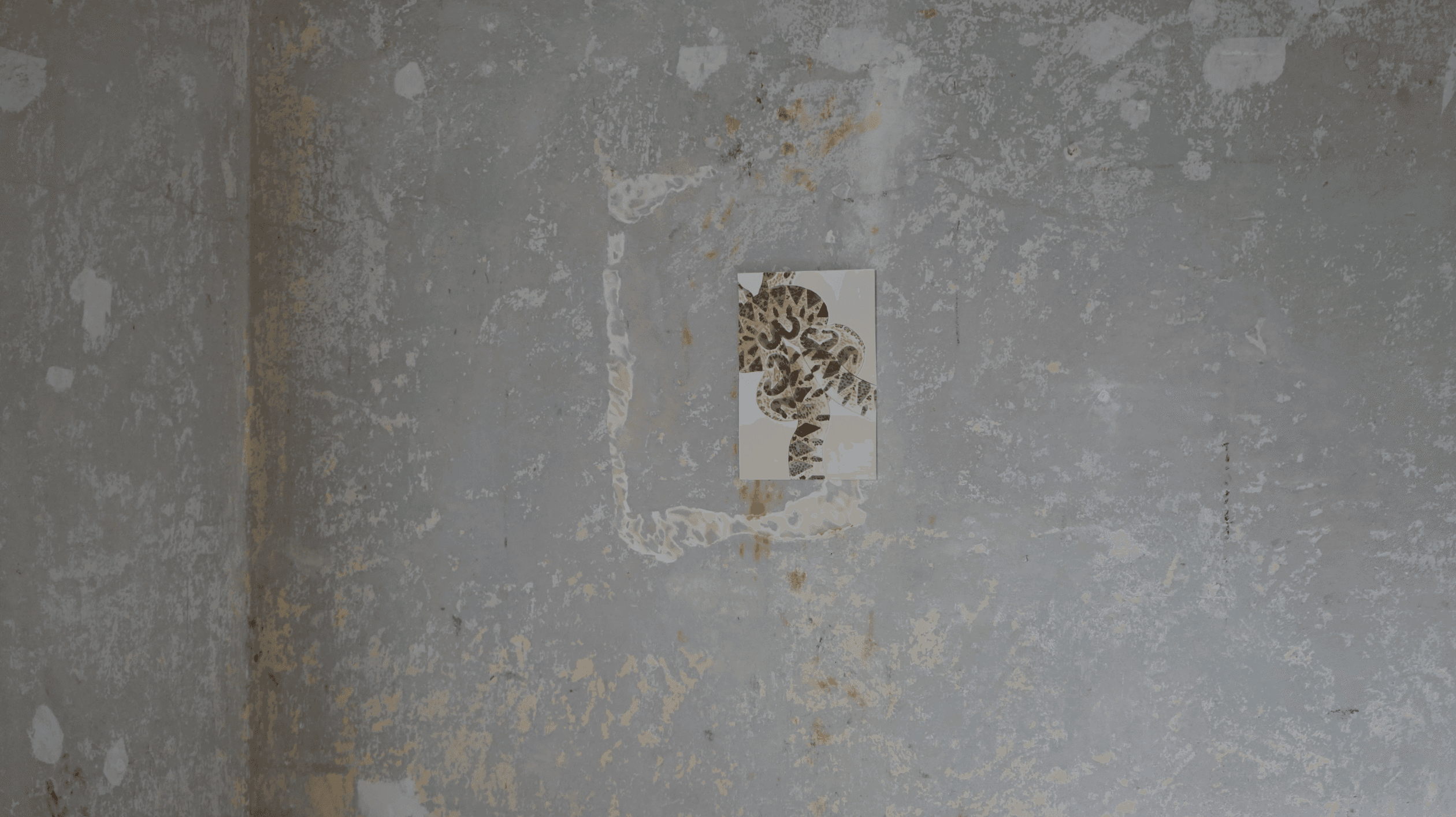
Artwork (1): Reef Knot (Hayyat Filastin/Serpiente Yarará), Carla Tapparo
Artwork (2): Dream-like Rooted, Carla Tapparo

Fiction for Liberation

Fiction for Liberation started with curiosity, an online group of people, and limited knowledge of each other. The group had come together to do some remote skill sharing. We all came from some type of organising, art, academia, and everything in between. Fiction for Liberation was what I felt I could give and share with everybody, it was my offering to the collective.

I first started sharing books with no curriculum to follow.

I then prepared a simple document with what I called ‘starting points.’ These included a ‘semillero de ideas’ (a seed box of ideas where all could type ideas they had and others could also write them); prompts in regards to the genre or format of the text as a way of help the writing process start. Also, an emotional compass to help define what is it that I am trying to feel through writing – perhaps catharsis, or clarity over a lived experience,or pleasure… Or, if the text was to be read out loud or sung, instead of read silently.

We can write collectively, alone, or organically form groups if so desired. The group waxes and wanes. We decided beforehand to not think of publishing, to actually avoid it while we are writing, as not to let that future judgement seep into our words.

This has led to multiple moments of collective song writing and solitary poems, some about the pain of witnessing and how to harness it through myth remembering, others about the people around us who struggle with us, but we have no strong personal feelings.

Trying to write about things that usually go unnoticed in hegemonic grand narratives.


Some books we have shared

  1. Split Tooth, Tanya Tagaq (short stories)

  2. Afterglow: Climate Fiction for Future Ancestors, compiled by Drist (short stories)

  3. Undrowned: Black Feminist Lessons from Marine Mammals

  4. Alexis Pauline Gumbs (essays) The Faggots and their Friends between Revolutions

  5. Larry Mitchell (poetry / prose / illustration) 

  6. The Deep, Solomon Rivers (novel, listen with The Deep by clipping.)

Writing exercises for you to try

EXERCISE 1

Poetry for those we don’t like

But are beside us

Think of the feelings your friends’, lovers’, companions’ faces arise in you. Think about the most regenerative ones, the ones that uplift you with actionable hope and desire to continue. 

Acknowledge where this feeling is placed in your body, try to hold it there. Now think about their faces, of your beloved ones. After a moment, allow these faces to metamorphose into people you have considered to be at the margins of your life: people you might organise or collaborate with; people you are in agreement with, but whose companionship did not blossom into a friendship. It could be someone whose contradictions you recognise more quickly, more annoyingly. Do not attempt to cast a judgement then. Perhaps it is not only one person, but an entire group;  part of the space(s) where you organise, operate, work,  and fight.

Their actions, concrete and material, still bring you hope; their goals, perhaps also their values, still align with yours. Write for them something sincere, holding all the feelings that might appear contradictory in your hands.


EXERCISE 2

Think of a moment where you felt, and probably were rendered, helpless, desperate. 

The one that comes to my mind is when my sister was attacked by a fascist. The surprise of the hit, yet I felt something was off just a few moments before… Cut the story short, and add something different, something that defies the possibilities of reason. Cut the story short again, in a different moment now, and change something again, make it so defiant that reason has to change. What are you usually doing? Confronting, averting, avoiding? Can you do something else? Cut the story short again, in whichever moment you like, do so a few more times.


About Carla
Carla Tapparo (she/her) is a transdisciplinary artist from the Abya Yala territory (Argentina) currently based in Italy. She was part of the self-organised self-defence queer teaching group Viktimas de Nada, and the collective of Live Coders CLiC, both in her country of origin. She is currently an active member of the civil Search and Rescue in the Central Mediterranean.

Malleable Time

More-Than-Human Models

Speculative Repair

Leadership

Carla Tapparo

Reimagining Community & Repair

More-Than-Human Models

Speculative Repair

Leadership

Fictions for Liberation

Create a free website with Framer, the website builder loved by startups, designers and agencies.