Jeanne van Heeswijk is a visual artist who facilitates the creation of dynamic and diversified public spaces in order to “radicalise the local.” Their work emerges from specific local contexts and unfolds over extended periods of time, allowing relationships, shared knowledge and agency to develop. Collaborators are invited to reflect on their own positions, histories, and belongings, and to collectively question existing power structures while practicing alternative ways of living and working together.
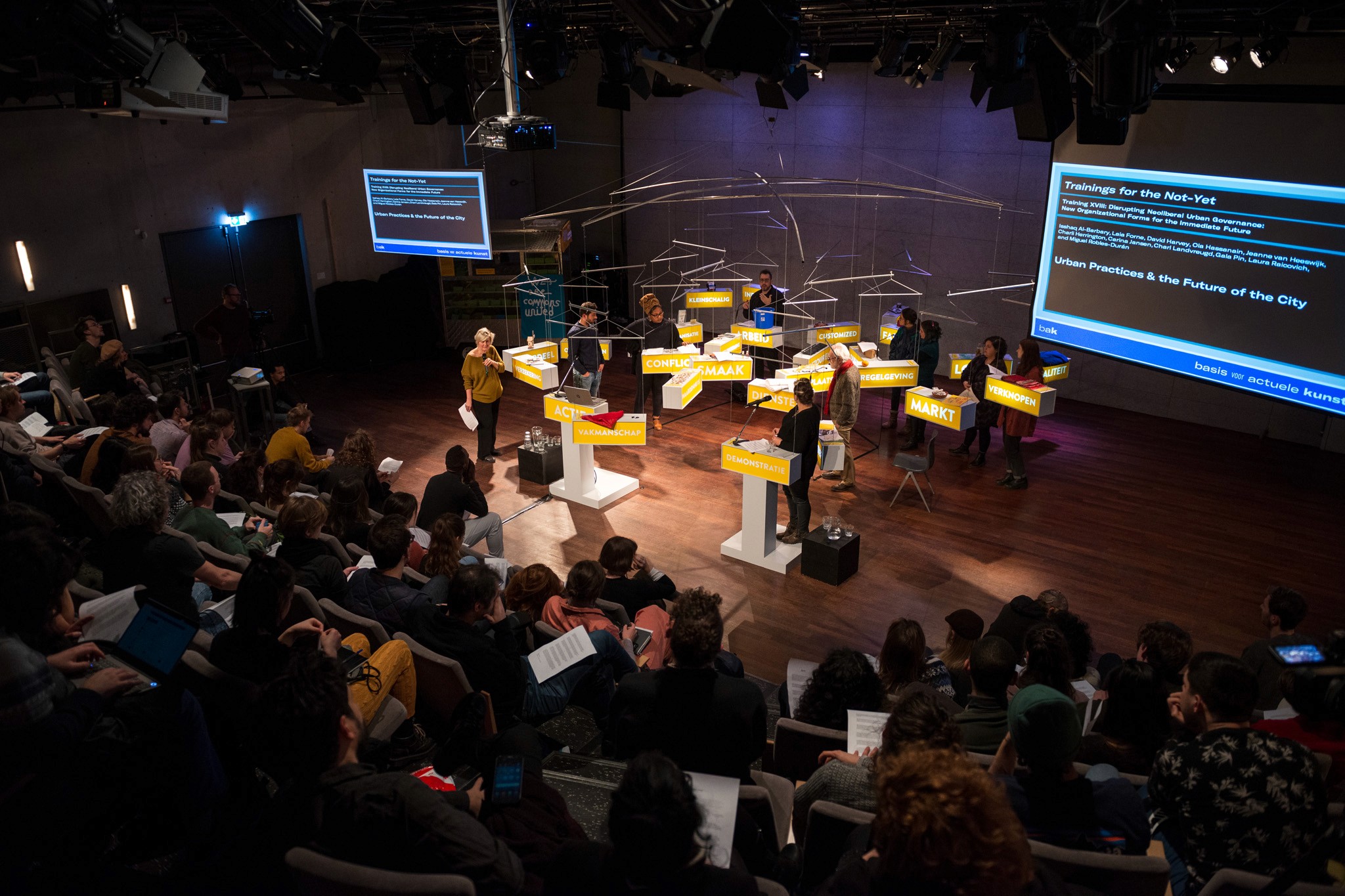
Grounded in methods from community organising, pedagogy, storytelling, and spatial practice, Van Heeswijk’s projects facilitate what she describes as “training for the not-yet” — a process of preparing ourselves, together, for a more just future that has not yet been realised but needs to be collectively imagined and enacted.
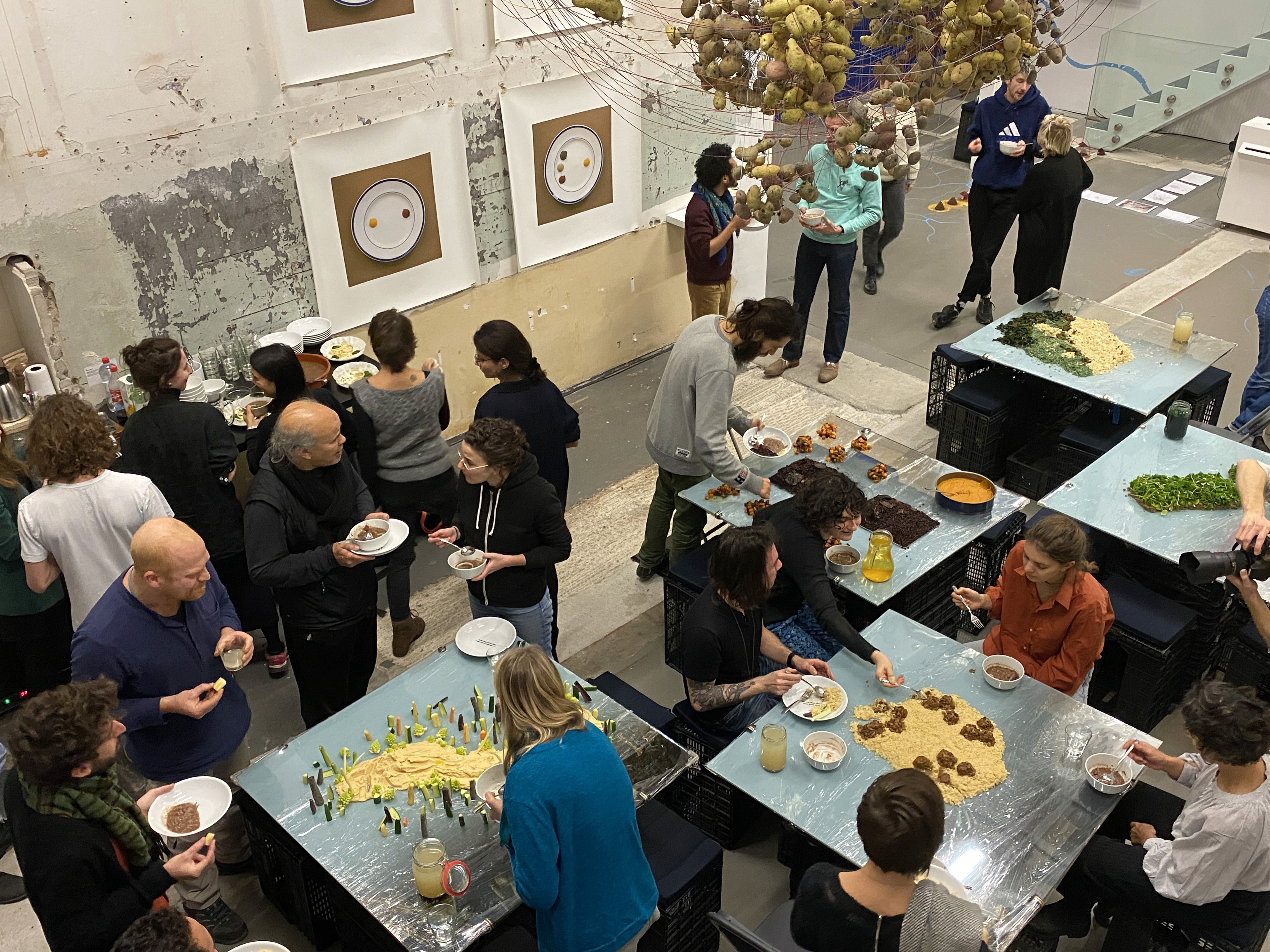
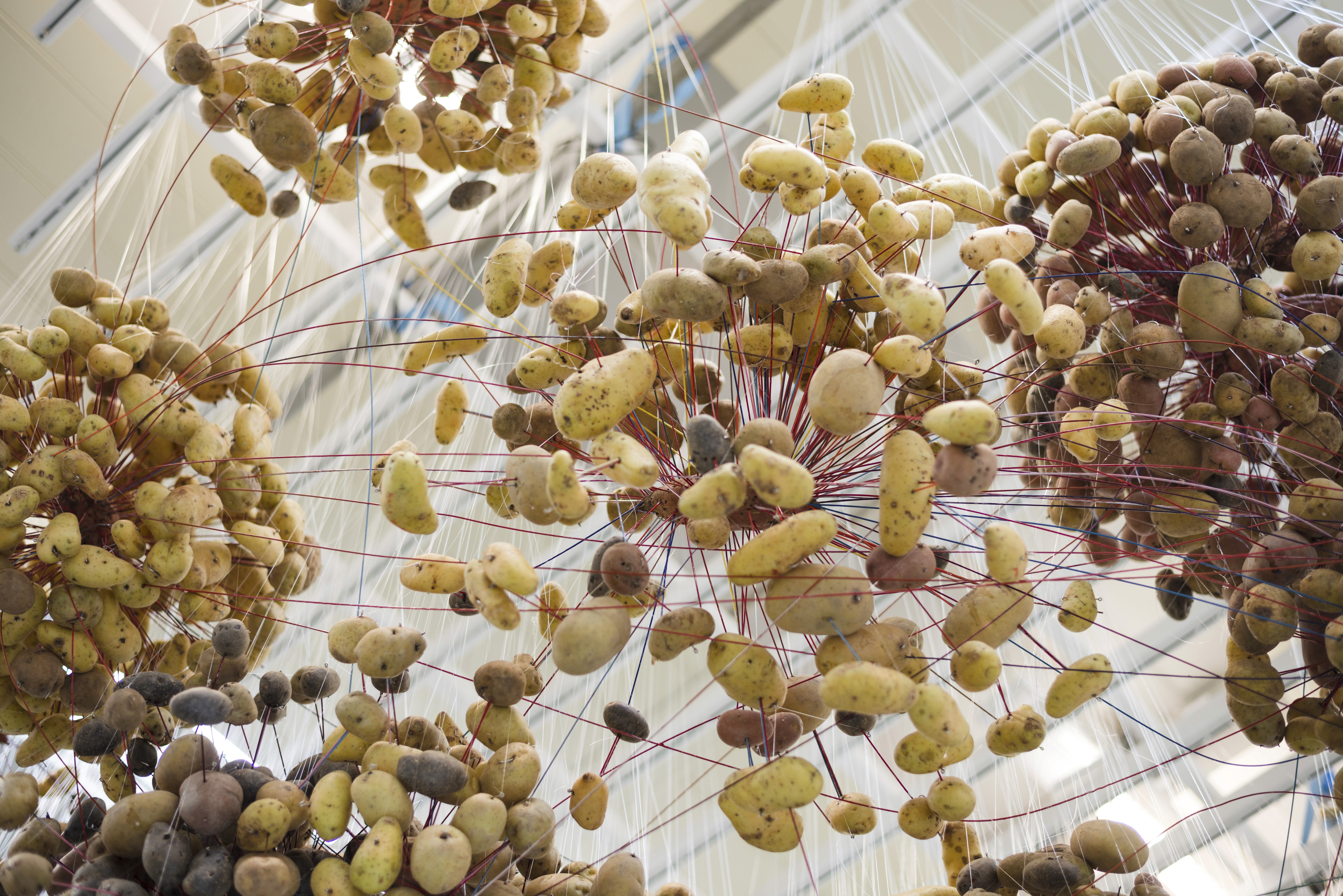
For “Towards Life: tools for ecological imaginations” Jeanne discusses the last of her long-lasting, collective, community-cum-artistic projects: BAK Basecamp for Tactical Imaginaries. What follows is a multimedia ‘digest’ which tries to encapsulate the thought-provocking practice and thinking of the artist and of the Basecamp, dissected into both written and sonic interview excerpts, a lexicon of key terms, images, as well as external resources to further dig into Jeanne’s work.
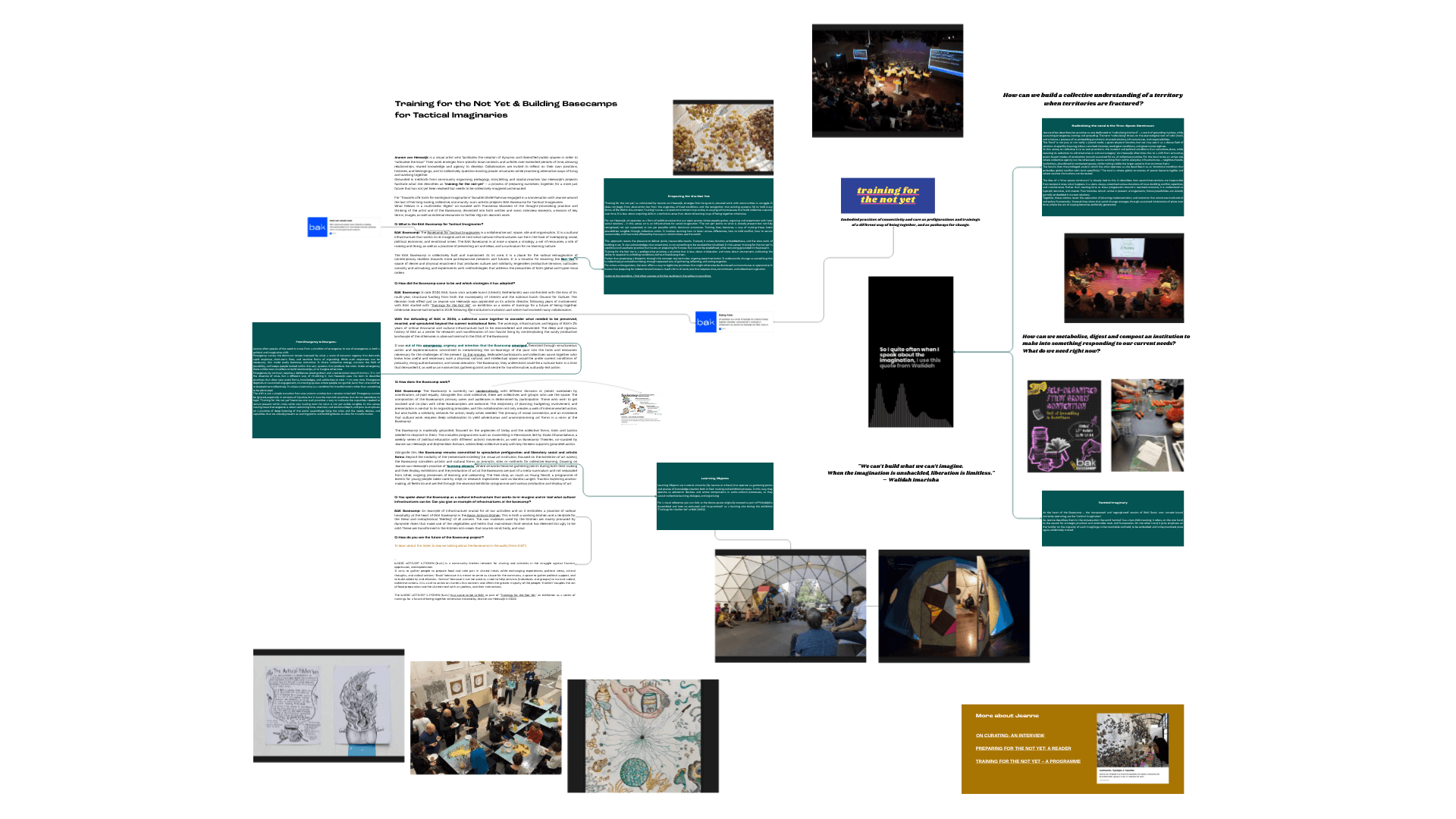
You can view this content on a canvas board, by clicking HERE or by browsing through it directly on this webpage.
Radicalising the Local & the Time–Space Continuum
Jeanne often describes her practice as one dedicated to “radicalising the local” – a work of grounding in place, while sustaining emergence, rooting and spreading. The term ‘radicalising’ draws on the etymological root of radix (root), and is hence a process of re-embedding practice in situated relations, infrastructures, and responsibilities.
The ‘local’ is not just, or not really a ‘postal code’, a given physical location, but we may see it as a dense field of relations shaped by housing, labour, racialized histories, ecological conditions, and governance regimes.
In this sense, to radicalise is to re-root practice in the material and political conditions that constitute place, while resisting its reduction to administrative or cultural category. Van Heeswijk often links this to a shift from extractive, event-based modes of production toward sustained forms of collective practice. For the local to be an active site where collective agency can be rehearsed, means working from within everyday infrastructures – neighbourhoods, institutions, abandoned or contested spaces, while making visible the larger systems that structure them. Indeed, Jeanne’s work tends to spatially anchor at such scales: the scale of a neighbourhood, or of an institution, as in there the qualitative dimension of the local as an “emotional condition that embodies global conflict with local specificity” becomes manifested. Said differently, the local is where global structures of power become legible and where counter-formations can be tested.
The idea of a “time–space continuum” is closely tied to this. It describes how spatial interventions are inseparable from temporal ones: what happens in a site is always stretched across durations of trust-building, conflict, repetition, and maintenance. Rather than treating time as linear progression toward a resolved outcome, it is understood as layered, recursive, and uneven. Past histories remain active in present arrangements; future possibilities are already partially embedded in current relations.
Together, these notions resist the separation of planning, implementation, and outcome that structures institutional and policy frameworks. Instead, they show that social change emerges through sustained inhabitation of place over time, where the act of staying becomes politically generative.
Tactical Imaginary:
At the heart of the Basecamp – the ‘composted’ and ‘regurgitated’ version of BAK (basis voor actuele kunst) currently operating, are the “tactical imaginaries”.
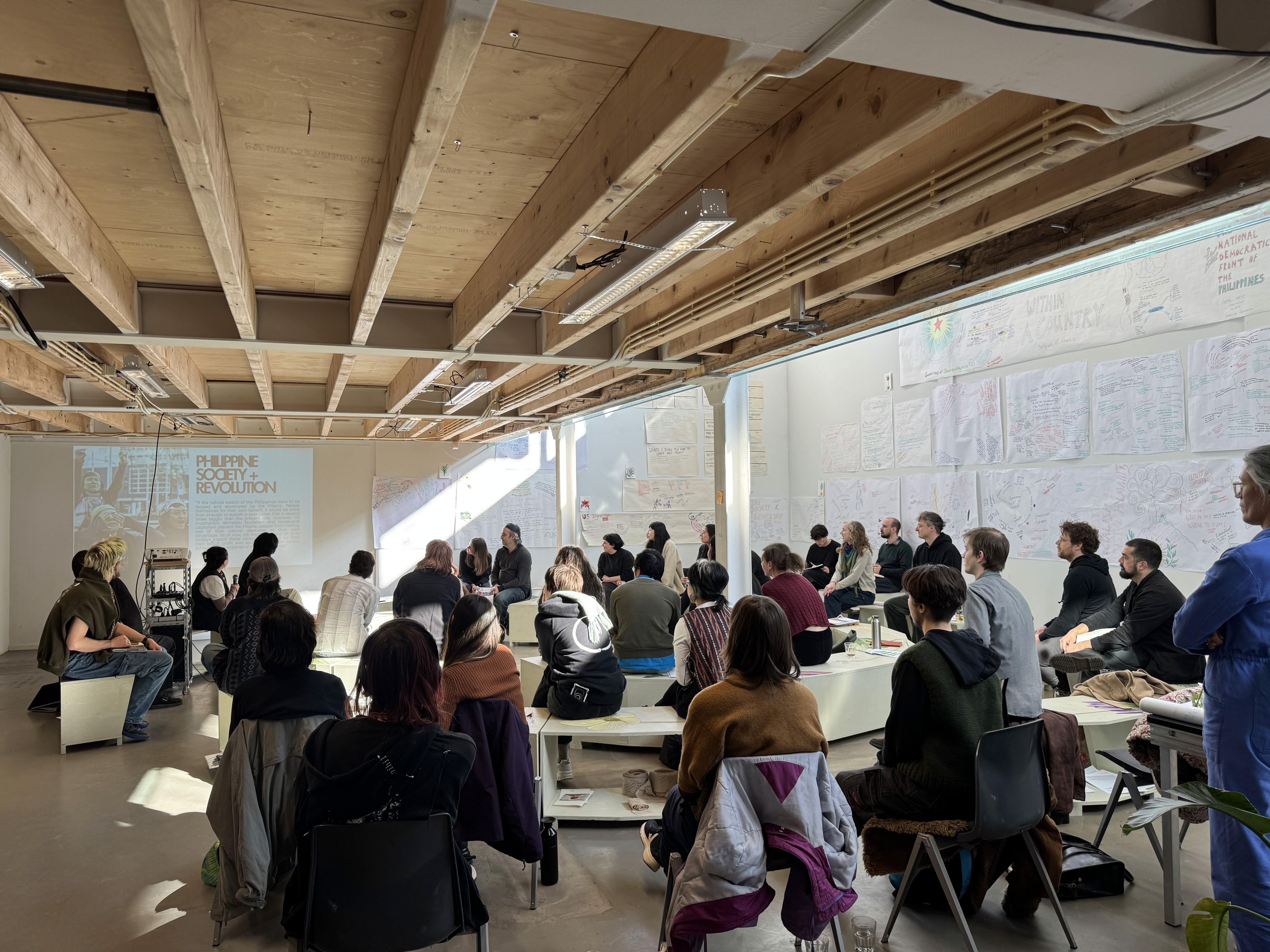
As Jeanne describes them in the conversation the word ‘tactical’ has a two-fold meaning: it refers, on the one hand, to the search for strategic, practical and actionable tools and frameworks. On the other hand, it puts emphasis on the ‘tactile’, on the capacity of such imaginings to be touchable and held, to be embodied and to be practiced, once again, collectively trained.
"We can’t build what we can’t imagine.
When the imagination is unshackled, liberation is limitless."
– Walidah Imarisha
Sources & further readings:
Van Heeswijk, Jeanne, Preparing for the Not Yet in Ana Paula Pais & Carolyn F. Strauss (eds.), Slow Reader
Van Heeswijk, Jeanne. Training for the Not Yet (2019–ongoing). BAK, basis voor actuele kunst, Utrecht.
Project archive and documentation.
Van Heeswijk, Jeanne; Hlavajova, Maria; Rakes, Rachael (eds.). Toward the Not-Yet: Art as Public Practice. MIT Press / BAK, 2021.
Brown, adrienne maree. Emergent Strategy. AK Press, 2017.
Garcés, Marina. 2012. Honesty with the Real. Journal of Aesthetics & Culture 4 (1).
Gilmore, Ruth Wilson. Golden Gulag. University of California Press, 2007.
Harney, Stefano & Moten, Fred. The Undercommons. Minor Compositions, 2013.
hooks, bell. Teaching to Transgress. Routledge, 1994.
Tuck, Eve & Yang, K. Wayne. Decolonization is Not a Metaphor. Decolonization, 2012.