Tactical Imaginaries

Towards Life

Jeanne van Heeswijk

Prefigurative Practice

Rituals of Renewal

Reimagining Organising & Community

Training for the Not Yet
&
Building Basecamps for Tactical Imaginaries

Jeanne van Heeswijk is a visual artist who facilitates the creation of dynamic and diversified public spaces in order to “radicalise the local.” Their work emerges from specific local contexts and unfolds over extended periods of time, allowing relationships, shared knowledge and agency to develop. Collaborators are invited to reflect on their own positions, histories, and belongings, and to collectively question existing power structures while practicing alternative ways of living and working together.

Grounded in methods from community organising, pedagogy, storytelling, and spatial practice, Van Heeswijk’s projects facilitate what she describes as  “training for the not-yet” — a process of preparing ourselves, together, for a more just future that has not yet been realised but needs to be collectively imagined and enacted.

For “Towards Life: tools for ecological imaginations” Jeanne discusses the last of her long-lasting, collective, community-cum-artistic projects: BAK Basecamp for Tactical Imaginaries. What follows is a multimedia ‘digest’ which tries to encapsulate the thought-provocking practice and thinking of the artist and of the Basecamp, dissected into both written and sonic interview excerpts, a lexicon of key terms, images, as well as external resources to further dig into Jeanne’s work.

You can view this content on a canvas board, by clicking HERE or by browsing through it directly on this webpage.
How can we build a collective understanding of a territory when territories are fractured?

Q: What is the BAK Basecamp for Tactical Imaginaries? 

BAK Basecamp: The Basecamp for Tactical Imaginaries is a collaborative act, space, site and organisation. It is a cultural infrastructure that works to re-imagine and re-tool what cultural infrastructures can be in the face of overlapping social, political, economic, and emotional crises. The BAK Basecamp is at once a space, a strategy, a set of resources, a site of making and doing, as well as a practice of presenting art and ideas, and a curriculum for co-learning culture.

The BAK Basecamp is collectively built and maintained. At its core, it is a place for the radical reimagination of contemporary realities towards more just/expansive presents and futures. It is a location for enacting the Not-Yet (1), a space of desire and physical enactment that produces culture and solidarity, engenders productive tensions, cultivates sociality and artmaking, and experiments with methodologies that address the precarities of both global and hyper-local orders.


Q: From Emergency to Emergence (2): How did the Basecamp come to be and which strategies has it adopted?

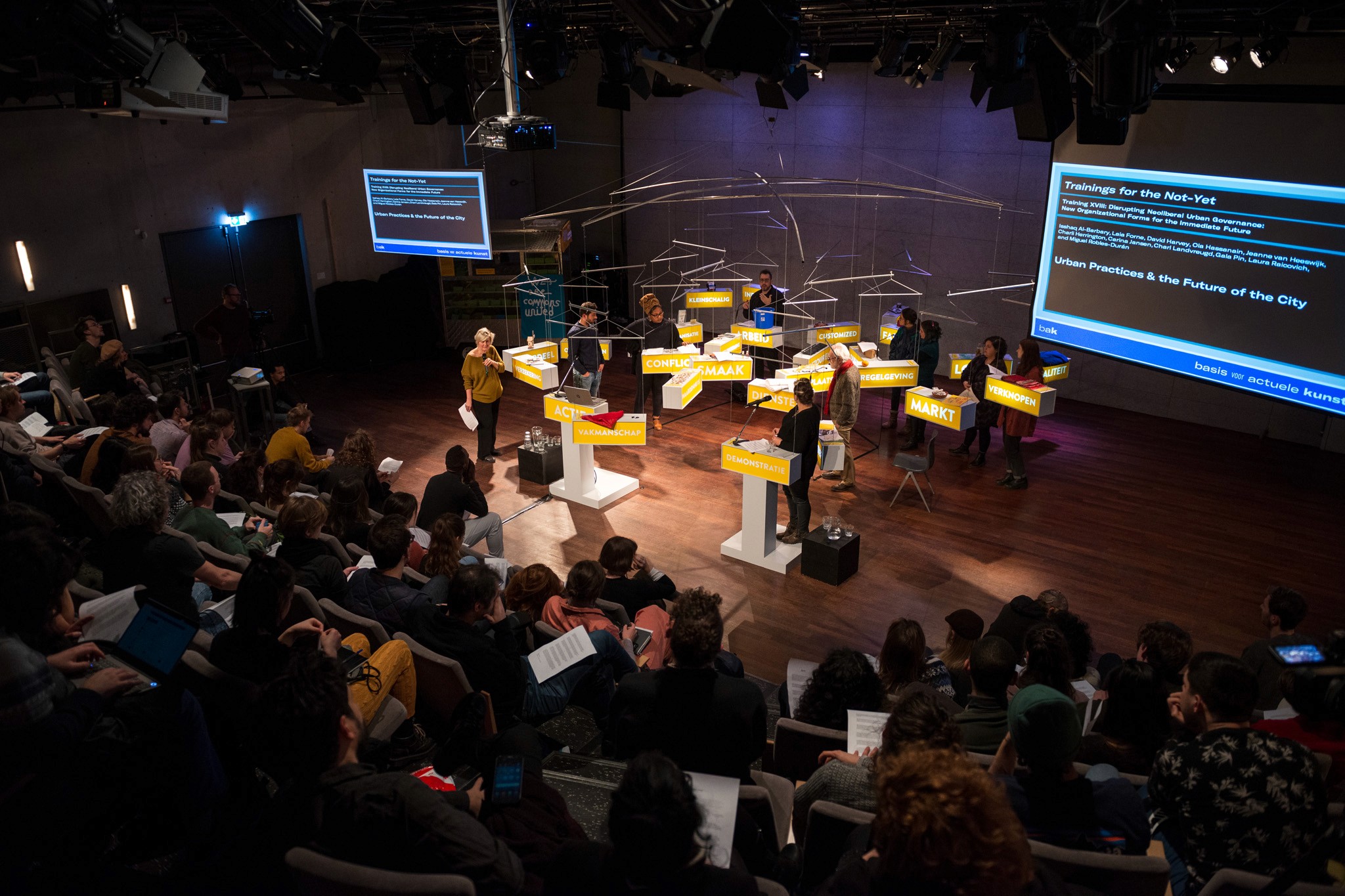
BAK Basecamp: In late 2024 BAK, basis voor actuele kunst (Utrecht, Netherlands) was confronted with the loss of its multi-year, structural funding from both the municipality of Utrecht and the national Dutch Council for Culture. The decision took effect just as I was appointed as its artistic director, following years of involvement with BAK started with “Trainings for the Not Yet”, an exhibition as a series of trainings for a future of being together otherwise I had initiated in 2019 following the institution’s invitation and which had involved many collaborators.

With the defunding of BAK in 2024, a collective came together to consider what needed to be preserved, enacted, and speculated beyond the current institutional form. The workings, infrastructure, and legacy of BAK’s 25 years of critical discourse and cultural infrastructure had to be reconsidered and reinvented. The deep and rigorous history of BAK as a center for research and manifestation of non-fascist living by contemplating the vastly productive landscape of the otherwise, is alive and central to the DNA of the Basecamp.


Q: How can we metabolise, digest and compost an institution to make it into something responding to our current needs? What do we need right now?

It was out of this urgency and intention that the Basecamp emerged, theorized through simultaneous action and experimentation committed to metabolizing the co-learnings of the past into the tools and resources necessary for the challenges of the present. In the process, dedicated participants and collectives came together who knew how useful and necessary such a physical, cultural, and intellectual space would be under current conditions of precarity, rising authoritarianism, and social alienation. The Basecamp, they understood, could be a cultural balm in a time that demanded it, as well as an incisive tool, gathering point and centre for transformative, culturally-led action.


Q: What is the BAK Basecamp for Tactical Imaginaries? 

BAK Basecamp: The Basecamp for Tactical Imaginaries is a collaborative act, space, site and organisation. It is a cultural infrastructure that works to re-imagine and re-tool what cultural infrastructures can be in the face of overlapping social, political, economic, and emotional crises. The BAK Basecamp is at once a space, a strategy, a set of resources, a site of making and doing, as well as a practice of presenting art and ideas, and a curriculum for co-learning culture.

The BAK Basecamp is collectively built and maintained. At its core, it is a place for the radical reimagination of contemporary realities towards more just/expansive presents and futures. It is a location for enacting the Not-Yet (1), a space of desire and physical enactment that produces culture and solidarity, engenders productive tensions, cultivates sociality and artmaking, and experiments with methodologies that address the precarities of both global and hyper-local orders.


Q: From Emergency to Emergence (2): How did the Basecamp come to be and which strategies has it adopted?

BAK Basecamp: In late 2024 BAK, basis voor actuele kunst (Utrecht, Netherlands) was confronted with the loss of its multi-year, structural funding from both the municipality of Utrecht and the national Dutch Council for Culture. The decision took effect just as I was appointed as its artistic director, following years of involvement with BAK started with “Trainings for the Not Yet”, an exhibition as a series of trainings for a future of being together otherwise I had initiated in 2019 following the institution’s invitation and which had involved many collaborators.

With the defunding of BAK in 2024, a collective came together to consider what needed to be preserved, enacted, and speculated beyond the current institutional form. The workings, infrastructure, and legacy of BAK’s 25 years of critical discourse and cultural infrastructure had to be reconsidered and reinvented. The deep and rigorous history of BAK as a center for research and manifestation of non-fascist living by contemplating the vastly productive landscape of the otherwise, is alive and central to the DNA of the Basecamp.


Q: How can we metabolise, digest and compost an institution to make it into something responding to our current needs? What do we need right now?

It was out of this urgency and intention that the Basecamp emerged, theorized through simultaneous action and experimentation committed to metabolizing the co-learnings of the past into the tools and resources necessary for the challenges of the present. In the process, dedicated participants and collectives came together who knew how useful and necessary such a physical, cultural, and intellectual space would be under current conditions of precarity, rising authoritarianism, and social alienation. The Basecamp, they understood, could be a cultural balm in a time that demanded it, as well as an incisive tool, gathering point and centre for transformative, culturally-led action.


Q: How does the Basecamp work?

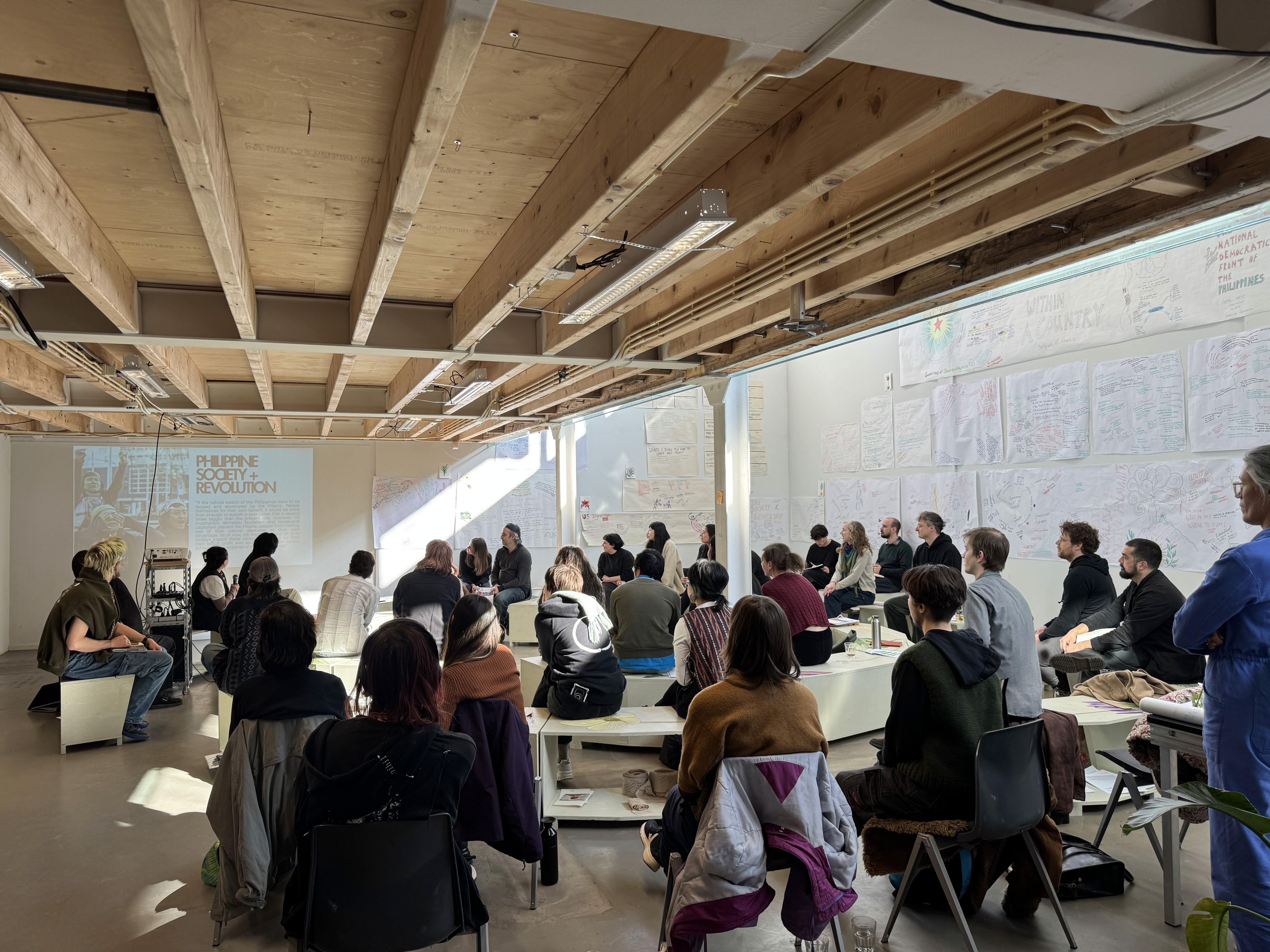
BAK Basecamp: The Basecamp is currently run sociocratically *✦, with different domains or ‘petals’ caretaken by coordinators, all remunerated equally. Alongside this core collective, there are collectives and groups who use the space. The composition of the Basecamp’s primary users and audiences is determined by participation. Those who wish to get involved and co-plan with other Basecampers are welcome. The reciprocity of planning, budgeting,  involvement, and presentation is central to its organizing principles, and this collaboration not only creates a web of interconnected actors, but also builds a solidarity network for action, ready when needed. The primacy of social connection, and an insistence that cultural work requires deep collaboration to yield adventurous and uncompromising art forms is a norm at the Basecamp.

The Basecamp is materially grounded, focused on the urgencies of today and the collective forms, tools and tactics needed to respond to them. This includes programmes such as Assembling in Resistance, led by Iliada Charamlabous, a weekly series of political education with different activist movements, as well as Basecamp Theories, co-curated by Jeanne van Heeswijk and Sophie Mak-Schram, where deep collective study with key thinkers supports grounded action.


Alongside this, the Basecamp remains committed to speculative prefiguration and liberatory social and artistic forms. Beyond the modality of the ‘presentatie instelling *★, the Basecamp considers artistic and cultural forms as prompts, sites or methods for collective learning. Drawing on Jeanne van Heeswijk’s practice of ‘learning objects’ (3), where artworks become gathering points during both their making and their display, exhibitions and the production of art at the Basecamp are part of a meta-curriculum and not separated from other, ongoing processes of learning and unlearning. The free shop, as much as Young Revolt, a programme of events for young people taken care by Jolijd, or research trajectories such as Sandra Lange’s Traction exploring access-making, all feed into and are fed through the seasonal exhibition programme and various production and display of art.


Q: You spoke about the Basecamp as a cultural infrastructure that works to re-imagine and re-tool what cultural infrastructures can be. Can you give an example of infrastructures at the basecamp ?

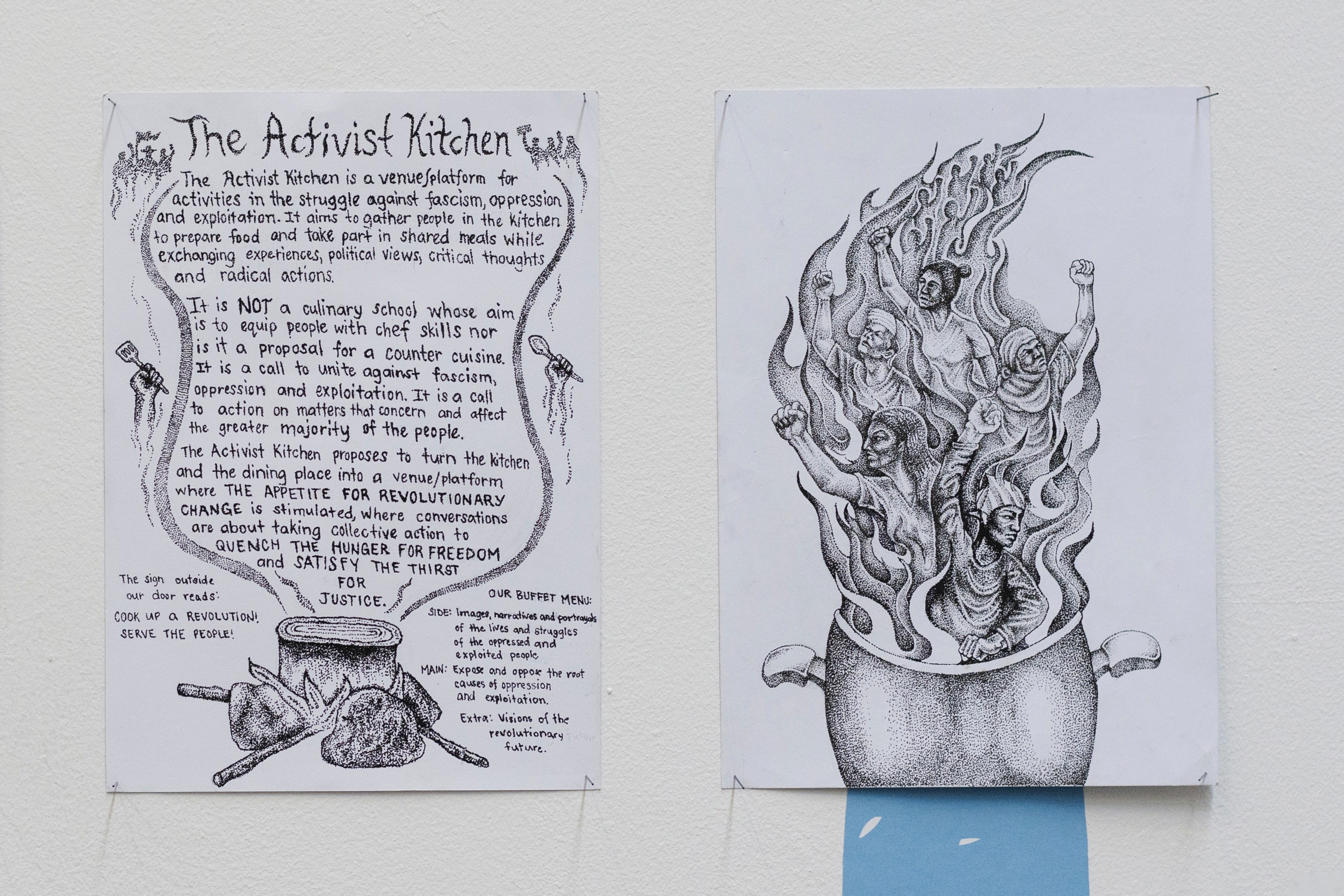
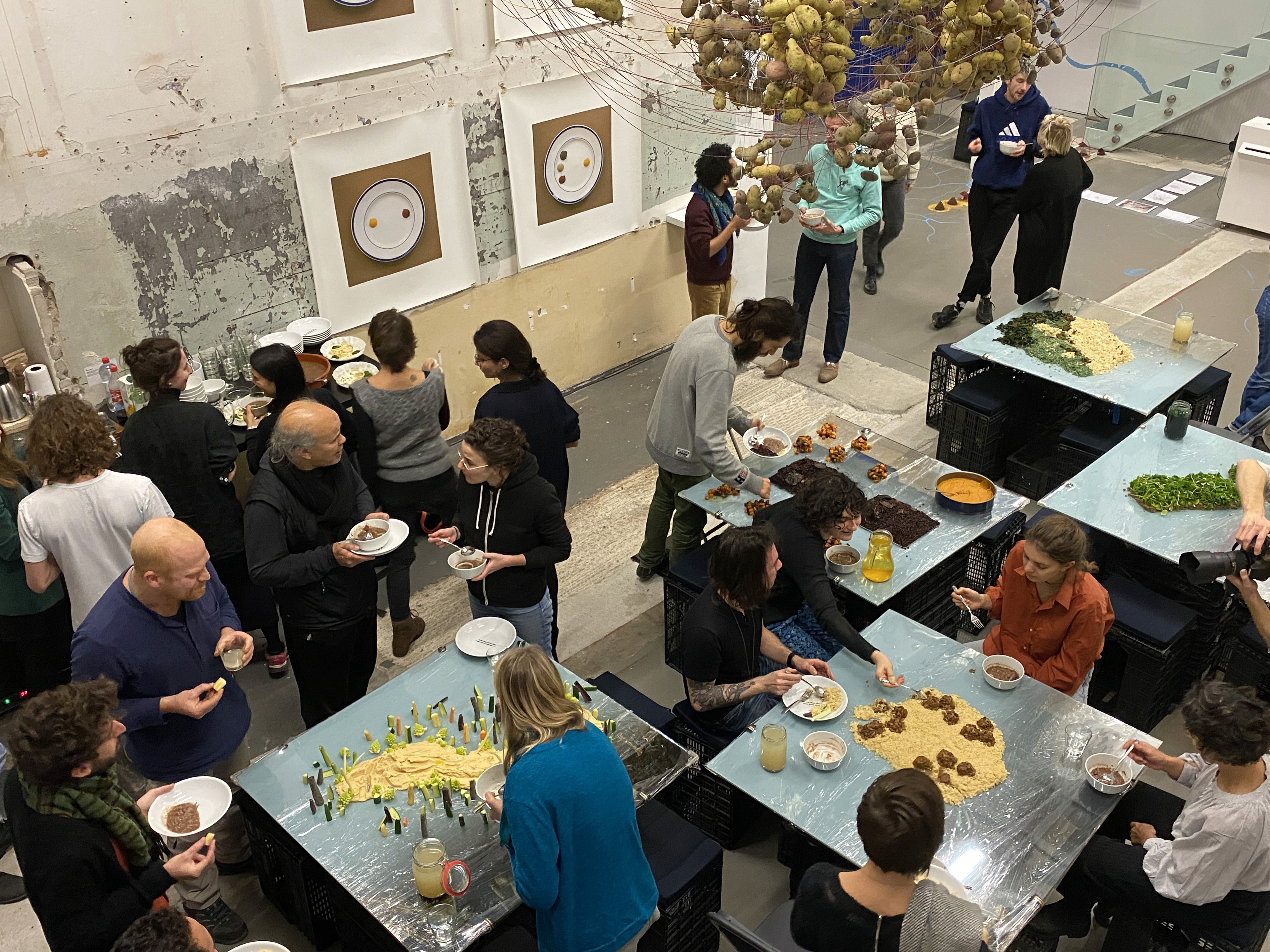
BAK Basecamp: An example of infrastructure crucial for all our activities and as it embodies a practice of radical hospitality at the heart of BAK basecamp is the Basic Activist Kitchen *⊹. This is both a working kitchen and a tentpole for the literal and metaphorical “feeding” of all comers. The raw materials used by the Kitchen are mainly procured by dumpster dives that make use of the vegetables and herbs that mainstream food service has deemed too ugly to be sold. These are transformed in the Kitchen into meals that nourish mind, body, and soul.


Q: How do you see the future of the Basecamp project?

To learn about this listen to Jeanne talking about the Basecamp in the audio below.

______________________________________________________________________________________________________________________

 ✦. You can read more about sociocracy here.

★. Visual art institution, focused on the exhibition of art works.

⊹. b.ASIC a.CTIVIST k.ITCHEN (b.a.k.) is a community kitchen network for sharing and activities in the struggle against fascism, oppression, and exploitation.

It aims to gather people to prepare food and take part in shared meals while exchanging experiences, political views, critical thoughts, and radical actions. “Basic” because it is meant to serve as a base for the commons, a space to gather political support, and to build solidarity and alliances. “Activist” because it can be used as a tool to help activists (individuals and groups) to nurture radical, collective actions. It is a call to action on matters that concern and affect the greater majority of the people. “Kitchen” couples the act of food preparation and the shared meal with art, politics, and their interactions. The b.ASIC a.CTIVIST k.ITCHEN (b.a.k.) first came to be at BAK as part of “Trainings for the Not Yet,” an exhibition as a series of trainings for a future of being together otherwise initiated by Jeanne van Heeswijk in 2019.


Q: How does the Basecamp work?

BAK Basecamp: The Basecamp is currently run sociocratically *✦, with different domains or ‘petals’ caretaken by coordinators, all remunerated equally. Alongside this core collective, there are collectives and groups who use the space. The composition of the Basecamp’s primary users and audiences is determined by participation. Those who wish to get involved and co-plan with other Basecampers are welcome. The reciprocity of planning, budgeting,  involvement, and presentation is central to its organizing principles, and this collaboration not only creates a web of interconnected actors, but also builds a solidarity network for action, ready when needed. The primacy of social connection, and an insistence that cultural work requires deep collaboration to yield adventurous and uncompromising art forms is a norm at the Basecamp.

The Basecamp is materially grounded, focused on the urgencies of today and the collective forms, tools and tactics needed to respond to them. This includes programmes such as Assembling in Resistance, led by Iliada Charamlabous, a weekly series of political education with different activist movements, as well as Basecamp Theories, co-curated by Jeanne van Heeswijk and Sophie Mak-Schram, where deep collective study with key thinkers supports grounded action.

Alongside this, the Basecamp remains committed to speculative prefiguration and liberatory social and artistic forms. Beyond the modality of the ‘presentatie instelling *★, the Basecamp considers artistic and cultural forms as prompts, sites or methods for collective learning. Drawing on Jeanne van Heeswijk’s practice of ‘learning objects’ (3), where artworks become gathering points during both their making and their display, exhibitions and the production of art at the Basecamp are part of a meta-curriculum and not separated from other, ongoing processes of learning and unlearning. The free shop, as much as Young Revolt, a programme of events for young people taken care by Jolijd, or research trajectories such as Sandra Lange’s Traction exploring access-making, all feed into and are fed through the seasonal exhibition programme and various production and display of art.


Q: You spoke about the Basecamp as a cultural infrastructure that works to re-imagine and re-tool what cultural infrastructures can be. Can you give an example of infrastructures at the basecamp ?

BAK Basecamp: An example of infrastructure crucial for all our activities and as it embodies a practice of radical hospitality at the heart of BAK basecamp is the Basic Activist Kitchen *⊹. This is both a working kitchen and a tentpole for the literal and metaphorical “feeding” of all comers. The raw materials used by the Kitchen are mainly procured by dumpster dives that make use of the vegetables and herbs that mainstream food service has deemed too ugly to be sold. These are transformed in the Kitchen into meals that nourish mind, body, and soul.


Q: How do you see the future of the Basecamp project?


To learn about this listen to Jeanne talking about the Basecamp in the audio below.

__________________________________________

 ✦. You can read more about sociocracy here.

★. Visual art institution, focused on the exhibition of art works.

⊹. b.ASIC a.CTIVIST k.ITCHEN (b.a.k.) is a community kitchen network for sharing and activities in the struggle against fascism, oppression, and exploitation.

It aims to gather people to prepare food and take part in shared meals while exchanging experiences, political views, critical thoughts, and radical actions. “Basic” because it is meant to serve as a base for the commons, a space to gather political support, and to build solidarity and alliances. “Activist” because it can be used as a tool to help activists (individuals and groups) to nurture radical, collective actions. It is a call to action on matters that concern and affect the greater majority of the people. “Kitchen” couples the act of food preparation and the shared meal with art, politics, and their interactions. The b.ASIC a.CTIVIST k.ITCHEN (b.a.k.) first came to be at BAK as part of “Trainings for the Not Yet,” an exhibition as a series of trainings for a future of being together otherwise initiated by Jeanne van Heeswijk in 2019.


Lexicon: 

  1. Preparing, or Training for the Not Yet

“Training for the not yet,” as articulated by Jeanne van Heeswijk, emerges from long-term, situated work with communities in struggle. It does not begin from abstraction, but from the urgencies of lived conditions and the recognition that existing systems fail to hold many forms of life. Within this context, “training” names a shared commitment to practice, to staying with processes that build collective capacity over time. It is less about acquiring skills in a technical sense than about rehearsing ways of being together otherwise.

For van Heeswijk, art operates as a form of public practice that can open spaces where people gather, organise, and experiment with ‘new’ social relations – in this sense art is an infrastructure for social imagination. “The not yet” points to what is already present but not fully recognised, not yet supported, or not yet possible within dominant structures. Training, then, becomes a way of making these latent possibilities tangible through collective action. It involves learning how to listen across differences, how to hold conflict, how to remain accountable, and how to be affected by the ways in which others see the world.

This approach resists the pressure to deliver quick, measurable results. Instead, it values duration, embeddedness, and the slow work of building trust. It also acknowledges that uncertainty is not something to be resolved but inhabited. In this sense, “training for the not yet” is a political and aesthetic practice that insists on preparing for futures that cannot be predefined, while remaining grounded in the present. 

Training for the Not Yet is a prefigurative practice, a practice that is less about anticipation and more about attunement, cultivating the ability to respond to unfolding conditions without foreclosing them.

Rather than proposing a blueprint, through this concept Jeanne invites ongoing experimentation. It understands change as something that is collectively practiced into being, through repeated acts of gathering, reflecting, and acting together. 

For artists and organizers, the term offers a way to legitimize practices that might otherwise be dismissed as inconclusive or speculative. It insists that preparing for indeterminate futures is itself a form of work, one that requires time, commitment, and collective imagination.


Preparing for the Not Yet means building space and infrastructures that can
scaffold where we can imagine and practice the otherwise.


  1. From Emergency to Emergence

Jeanne often speaks of the need to move from a condition of emergency to one of emergence as both a political and imaginative shift.

Emergency names the dominant tempo imposed by crisis: a state of constant urgency that demands rapid response, short-term fixes, and reactive forms of organizing. While such responses can be necessary, this mode easily becomes extractive. It drains collective energy, narrows the field of possibility, and keeps people locked within the very systems that produce the crisis. Under emergency, there is little room to reflect, to build relationships, or to imagine otherwise.

Emergence, by contrast, requires a deliberate slowing down and a reorientation toward process. It is not the absence of crisis, but a different way of inhabiting it. Van Heeswijk uses the term to describe practices that allow new social forms, knowledges, and solidarities to take shape over time. Emergence depends on sustained engagement, on creating spaces where people can gather, learn from one another, and experiment collectively. It values uncertainty as a condition for transformation rather than something to be eliminated.

The shift is not a simple transition from one state to another, but a tension to be held. Emergency cannot be ignored, especially in contexts of injustice, but it must be met with practices that do not reproduce its logic. “Training for the not yet” becomes one such practice: a way to cultivate the capacities needed to remain present within crisis while also making room for what is not yet visible, tangible. In this sense, moving toward emergence is about reclaiming time, attention, and relational depth, and puts its emphasis on a practice of deep listening of the social assemblage living the crisis and the needs, desires, and capacities that are already present as starting points and building blocks to allow for transformation. 

  1. Learning Objects

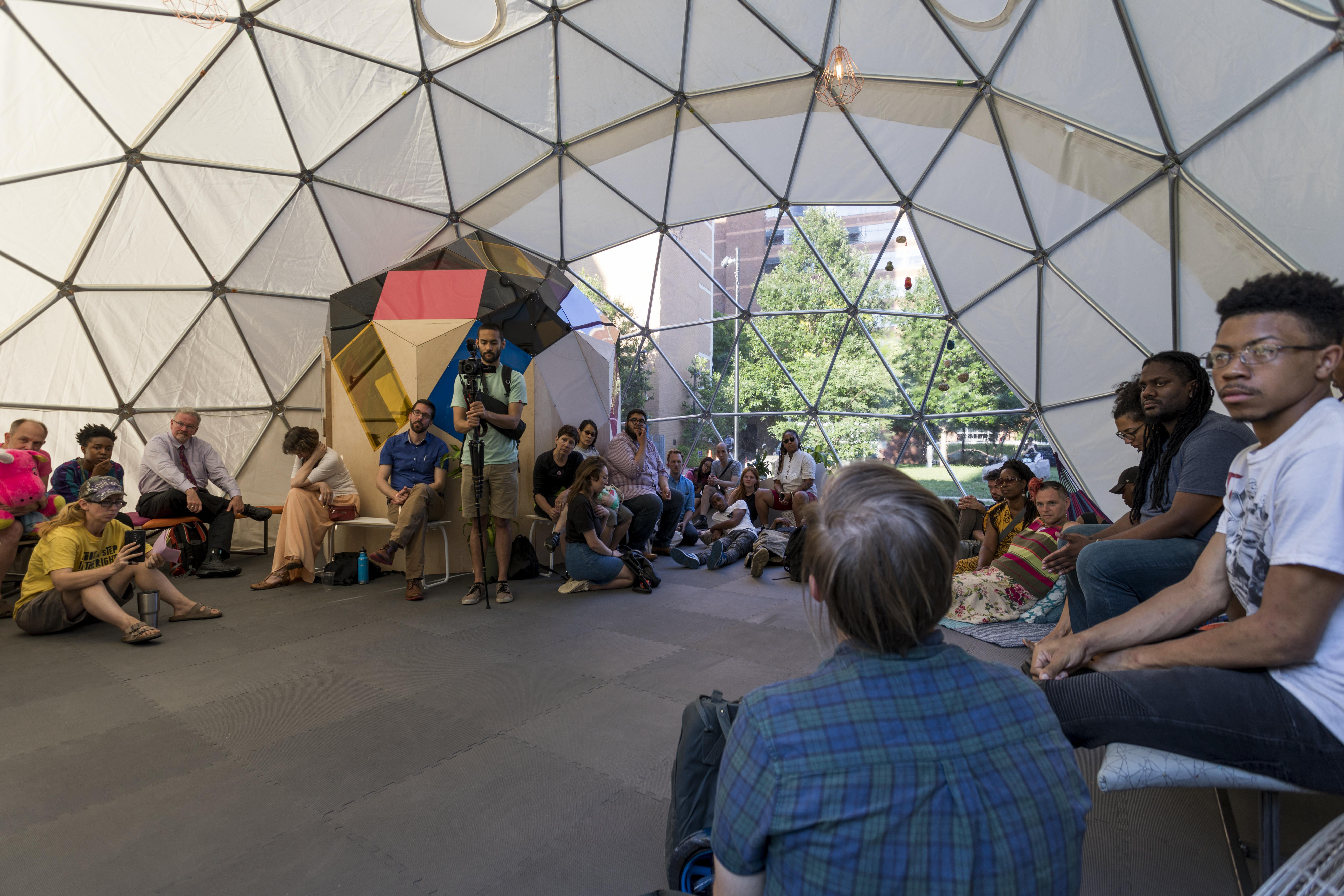
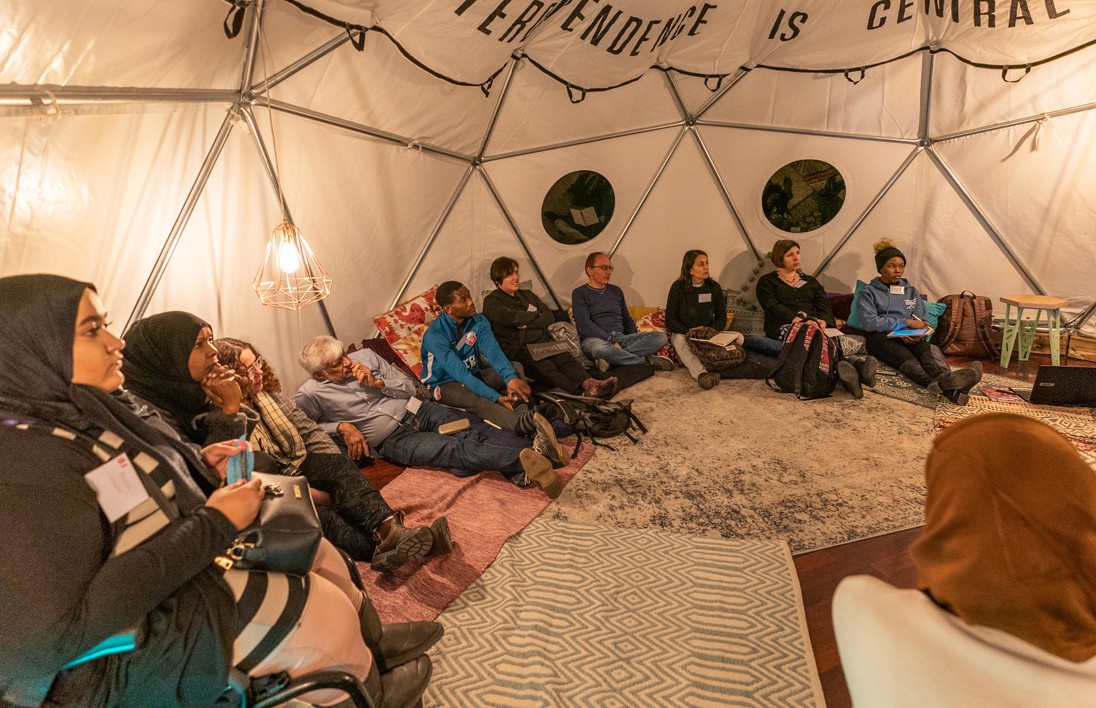
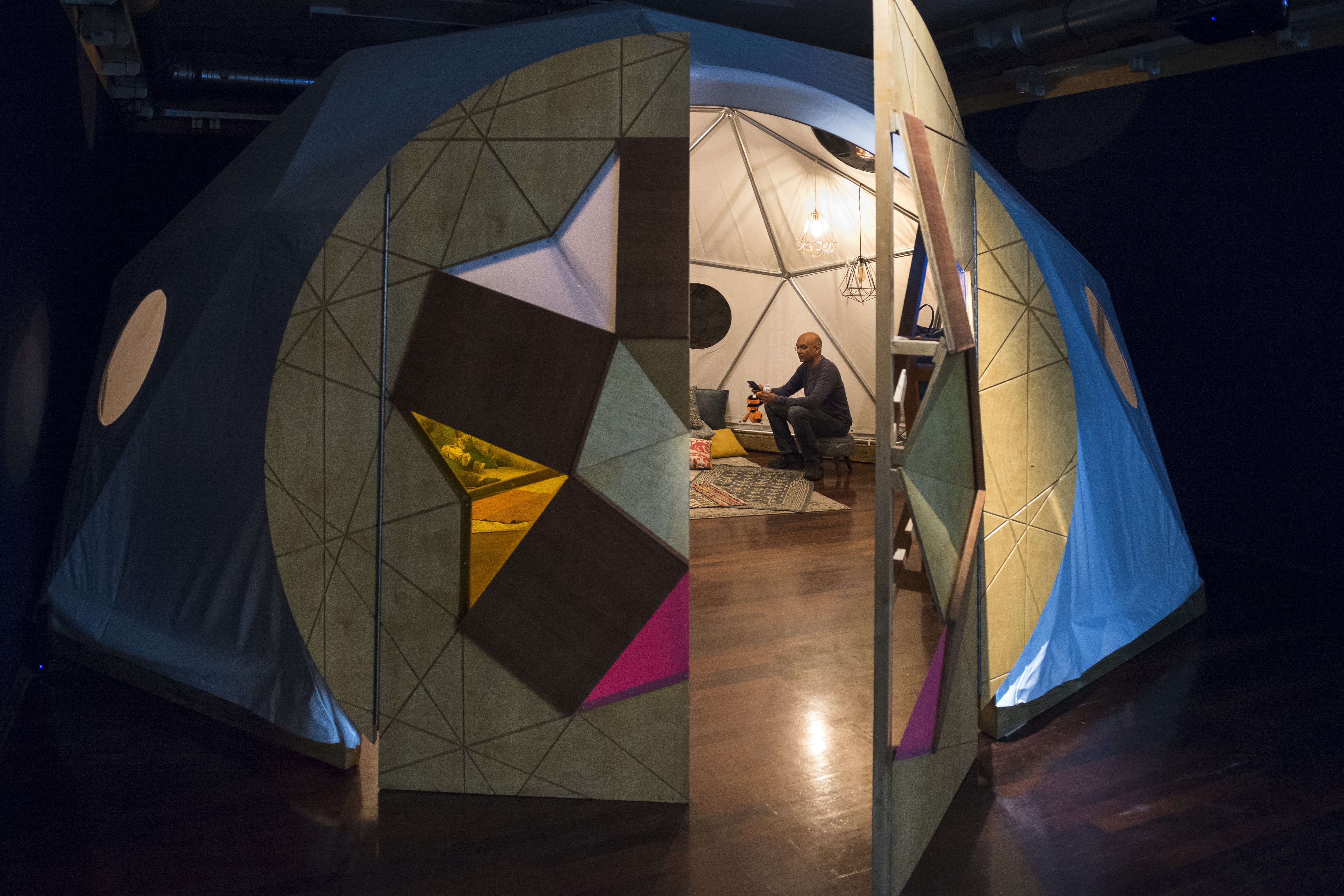
Learning Objects are material artworks (by Jeanne or others) that operate as gathering points and spaces of knowledge creation both in their making and exhibition process. In this way, they operate as epistemic devices and active components in socio-cultural processes, as they sustain collective learning, dialogue, and organising.

For a visual reference you can look at the dome-space originally created as part of Philadelphia Assembled and later re-activated and re-practiced as a learning site during the exhibition "Trainings for the Not Yet" at BAK (2019).


Lexicon: 

  1. Preparing, or Training for the Not Yet

“Training for the not yet,” as articulated by Jeanne van Heeswijk, emerges from long-term, situated work with communities in struggle. It does not begin from abstraction, but from the urgencies of lived conditions and the recognition that existing systems fail to hold many forms of life. Within this context, “training” names a shared commitment to practice, to staying with processes that build collective capacity over time. It is less about acquiring skills in a technical sense than about rehearsing ways of being together otherwise.

For van Heeswijk, art operates as a form of public practice that can open spaces where people gather, organise, and experiment with ‘new’ social relations – in this sense art is an infrastructure for social imagination. “The not yet” points to what is already present but not fully recognised, not yet supported, or not yet possible within dominant structures. Training, then, becomes a way of making these latent possibilities tangible through collective action. It involves learning how to listen across differences, how to hold conflict, how to remain accountable, and how to be affected by the ways in which others see the world.

This approach resists the pressure to deliver quick, measurable results. Instead, it values duration, embeddedness, and the slow work of building trust. It also acknowledges that uncertainty is not something to be resolved but inhabited. In this sense, “training for the not yet” is a political and aesthetic practice that insists on preparing for futures that cannot be predefined, while remaining grounded in the present. 

Training for the Not Yet is a prefigurative practice, a practice that is less about anticipation and more about attunement, cultivating the ability to respond to unfolding conditions without foreclosing them.

Rather than proposing a blueprint, through this concept Jeanne invites ongoing experimentation. It understands change as something that is collectively practiced into being, through repeated acts of gathering, reflecting, and acting together. 

For artists and organizers, the term offers a way to legitimize practices that might otherwise be dismissed as inconclusive or speculative. It insists that preparing for indeterminate futures is itself a form of work, one that requires time, commitment, and collective imagination.


Preparing for the Not Yet means building space and infrastructures that can
scaffold where we can imagine and practice the otherwise.


  1. From Emergency to Emergence

Jeanne often speaks of the need to move from a condition of emergency to one of emergence as both a political and imaginative shift.

Emergency names the dominant tempo imposed by crisis: a state of constant urgency that demands rapid response, short-term fixes, and reactive forms of organizing. While such responses can be necessary, this mode easily becomes extractive. It drains collective energy, narrows the field of possibility, and keeps people locked within the very systems that produce the crisis. Under emergency, there is little room to reflect, to build relationships, or to imagine otherwise.

Emergence, by contrast, requires a deliberate slowing down and a reorientation toward process. It is not the absence of crisis, but a different way of inhabiting it. Van Heeswijk uses the term to describe practices that allow new social forms, knowledges, and solidarities to take shape over time. Emergence depends on sustained engagement, on creating spaces where people can gather, learn from one another, and experiment collectively. It values uncertainty as a condition for transformation rather than something to be eliminated.

The shift is not a simple transition from one state to another, but a tension to be held. Emergency cannot be ignored, especially in contexts of injustice, but it must be met with practices that do not reproduce its logic. “Training for the not yet” becomes one such practice: a way to cultivate the capacities needed to remain present within crisis while also making room for what is not yet visible, tangible. In this sense, moving toward emergence is about reclaiming time, attention, and relational depth, and puts its emphasis on a practice of deep listening of the social assemblage living the crisis and the needs, desires, and capacities that are already present as starting points and building blocks to allow for transformation. 

  1. Learning Objects

Learning Objects are material artworks (by Jeanne or others) that operate as gathering points and spaces of knowledge creation both in their making and exhibition process. In this way, they operate as epistemic devices and active components in socio-cultural processes, as they sustain collective learning, dialogue, and organising.

For a visual reference you can look at the dome-space originally created as part of Philadelphia Assembled and later re-activated and re-practiced as a learning site during the exhibition "Trainings for the Not Yet" at BAK (2019).


Radicalising the Local & the Time–Space Continuum

Jeanne often describes her practice as one dedicated to “radicalising the local” – a work of grounding in place, while sustaining emergence, rooting and spreading. The term ‘radicalising’ draws on the etymological root of radix (root), and is hence a process of re-embedding practice in situated relations, infrastructures, and responsibilities. 

The ‘local’ is not just, or not really a ‘postal code’, a given physical location, but we may see it as a dense field of relations shaped by housing, labour, racialized histories, ecological conditions, and governance regimes. 

In this sense, to radicalise is to re-root practice in the material and political conditions that constitute place, while resisting its reduction to administrative or cultural category. Van Heeswijk often links this to a shift from extractive, event-based modes of production toward sustained forms of collective practice. For the local to be an active site where collective agency can be rehearsed, means working from within everyday infrastructures – neighbourhoods, institutions, abandoned or contested spaces, while making visible the larger systems that structure them. Indeed, Jeanne’s work tends to spatially anchor at such scales: the scale of a neighbourhood, or of an institution, as in there the qualitative dimension of the local as an “emotional condition that embodies global conflict with local specificity” becomes manifested. Said differently, the local is where global structures of power become legible and where counter-formations can be tested. 

The idea of a “time–space continuum” is closely tied to this. It describes how spatial interventions are inseparable from temporal ones: what happens in a site is always stretched across durations of trust-building, conflict, repetition, and maintenance. Rather than treating time as linear progression toward a resolved outcome, it is understood as layered, recursive, and uneven. Past histories remain active in present arrangements; future possibilities are already partially embedded in current relations.

Together, these notions resist the separation of planning, implementation, and outcome that structures institutional and policy frameworks. Instead, they show that social change emerges through sustained inhabitation of place over time, where the act of staying becomes politically generative.

  1. Tactical Imaginary:

At the heart of the Basecamp – the ‘composted’ and ‘regurgitated’ version of BAK (basis voor actuele kunst) currently operating, are the “tactical imaginaries”. 

As Jeanne describes them in the conversation the word ‘tactical’ has a two-fold meaning: it refers, on the one hand, to the search for strategic, practical and actionable tools and frameworks. On the other hand, it puts emphasis on the ‘tactile’, on the capacity of such imaginings to be touchable and held, to be embodied and to be practiced, once again, collectively trained.


"We can’t build what we can’t imagine.
When the imagination is unshackled, liberation is limitless."
– Walidah Imarisha
Sources & further readings:

Van Heeswijk, Jeanne, Preparing for the Not Yet in Ana Paula Pais & Carolyn F. Strauss (eds.), Slow Reader 

Van Heeswijk, Jeanne. Training for the Not Yet (2019–ongoing). BAK, basis voor actuele kunst, Utrecht.

Project archive and documentation. 
Van Heeswijk, Jeanne; Hlavajova, Maria; Rakes, Rachael (eds.). Toward the Not-Yet: Art as Public Practice. MIT Press / BAK, 2021.

Brown, adrienne maree. Emergent Strategy. AK Press, 2017.


Garcés, Marina. 2012. Honesty with the Real. Journal of Aesthetics & Culture 4 (1).


Gilmore, Ruth Wilson. Golden Gulag. University of California Press, 2007.


Harney, Stefano & Moten, Fred. The Undercommons. Minor Compositions, 2013.


hooks, bell. Teaching to Transgress. Routledge, 1994.


Tuck, Eve & Yang, K. Wayne. Decolonization is Not a Metaphor. Decolonization, 2012.

About Jeanne
Jeanne van Heeswijk is a visual artist who facilitates the creation of dynamic and diversified public spaces in order to “radicalise the local.” Over the years, she has been exploring and extensively discussed how we can collectively "train for the Not Yet" as a way to enact ways of imagining and belonging how to be together otherwise.

Tactical Imaginaries

Jeanne van Heeswijk

Reimagining Community & Repair

More-Than-Human Models

Speculative Repair

Leadership

Training for the Not Yet

&

Building Basecamps for Tactical Imaginaries

Create a free website with Framer, the website builder loved by startups, designers and agencies.